
Welcome to The India Fix by Shoaib Daniyal. A newsletter on Indian politics.
As always, if you’ve been sent this newsletter and like it, to get it in your inbox every week, sign up here (click on “follow”).
On April 21, Scroll broke the news that the International Monetary Fund had estimated that the per capita gross domestic product of Bangladesh would be higher than that of India in 2026.
This otherwise arcane bit of economic news produced a flurry of bitter reactions.
Former Infosys chief financial officer and Bharatiya Janata Party supporter, TV Mohandas Pai said that it was “idiotic” of Professor of Economics at Cornell University and former chief economist of the World Bank Kaushik Basu to highlight this data in a tweet. Pai blamed the situation on a “currency issue” since Bangladesh has a “fixed rate” – a point that is factually incorrect.
Former Indian Foreign Secretary Kanwal Sibal dismissed the data point altogether since, in his opinion, no “sane person” could ever compare Bangladesh with India.
A developing country
Part of the reason so many Indians were shocked at this India-Bangladesh data is that quite a few of them have a somewhat exaggerated image of India’s position in the world. I have written about India’s superpower delusions that were widespread at the start of the millennium. Versions of that fantasy still continue – note the BJP’s slogan claiming that India is a vishwaguru, a world leader – in spite of the fact that the quality of life Indians enjoy is very much like that of any developing country.
If anything, in fact, India is a laggard even among developing countries. The country’s per capita GDP is significantly below the global average.
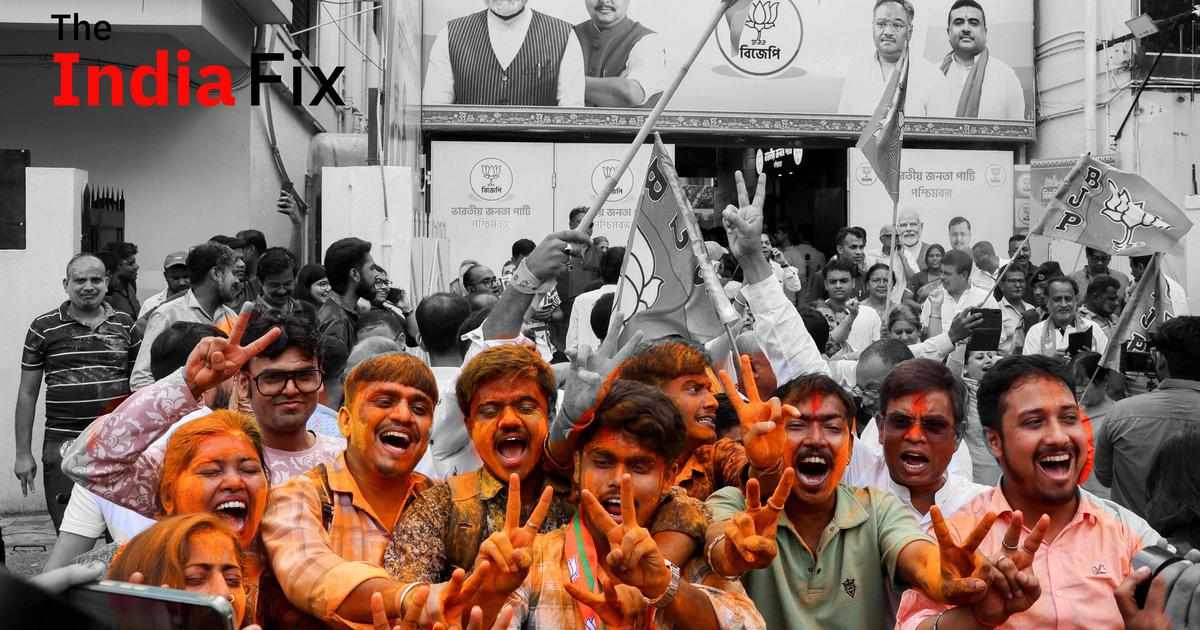
To this is mixed the additional factor of Bangladesh’s status in Indian politics. As Scroll’s Slow Lane newsletter had pointed out in January, Bangladesh is the new Pakistan: an object of sustained Hindutva politics within India. The BJP and its supporters claim that large numbers of Bangladeshis are crossing over into India for economic opportunities.
Data-free claim
However, there has never been any data to support this idea. If anything, the deportations of people who the Modi government claims are Bangladeshi have repeatedly been seen to be erroneous: several bona fide Indian Muslims have been expelled instead. In Assam, the BJP chief minister openly admitted that Muslims are being pushed across the border without any legal process, which means their Bangladeshi citizenship has never been established.
Unique anti-migration politics
Economists have long know that India and Bangladesh are largely at similar levels of development. The International Monetary Fund’s per capita GDP comparisons serve to establish this point – clashing head on with India’s idea that there is mass economic migration from Bangladesh.
Anti-migration politics is common across the developed world, with right-wing anger directed at migrants from poorer countries. India might be unique in that it alleges mass economic migration from a country at a similar developmental level.
In this calculus, Assam pushes the boundaries of the surreal: its anti-migration politics is directed at a far more developed economy. Bangladesh’s per capita GDP is now nearly twice that of Assam. Those who allege mass economic migration have never explained what factors are driving large numbers of people to leave richer Bangladesh for a much poorer Assam.
Will this data from the International Monetary Fund end the idea, so popular among Hindutva supporters, that there is mass economic migration from Bangladesh? Given the significant gulf between economic reality and political momentum, likely not.
We welcome your comments at letters@scroll.in.









Write a comment ...