
Welcome to The India Fix by Shoaib Daniyal. A newsletter on Indian politics.
As always, if you’ve been sent this newsletter and like it, to get it in your inbox every week, sign up here (click on “follow”).
In less than a month, West Bengal goes to the polls. Yet, even now, lakhs of people in the state have no idea what their position on the voter roll is.
The confussion arises from a special intensive revision of the voter rolls being carried out by the Election Commission. Yet, five months after it started, the process is still not complete. Moreover, how the process is being carried out is shrouded in mystery.
Late on Monday, the Election Commission released a first supplementary voter list, which is meant to decide the fate of six million voters “under adjudication”. The commission has still not released overall data from the state. The Hindu reported that out of 32 lakh decided in the first list, 13 lakh have been deleted from the state’s voter rolls.
It is unclear when the rest of the voter roll will be completed.
What happens to voters whose names have been deleted? Special tribunals will hear their appeals if they are filed within 15 days. Given the scale of the deletions and the short time period, this effectively means that lakhs of people in West Bengal will lose their right to vote in the upcoming elections.
In a democracy, few things are more important than being able to vote. So why are so many people being denied it?
Illegal migrants vs clerical errors
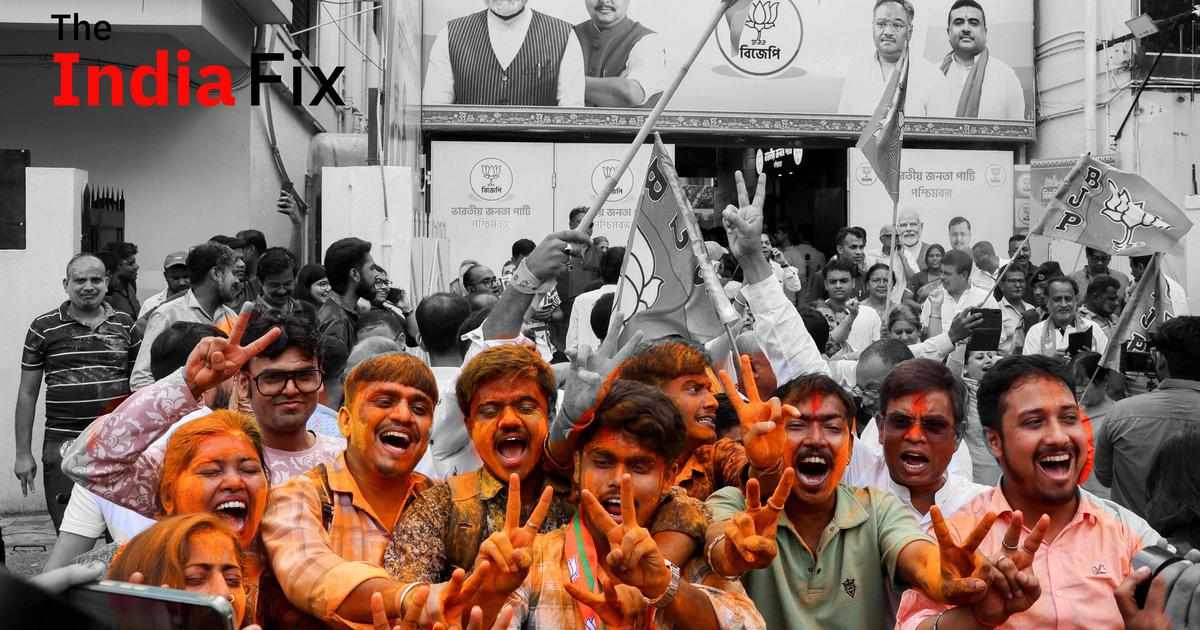
The political messaging put out by the Bharatiya Janata Party argues that this special intensive revision is being carried out to remove non-Indians from the voter rolls. The party has long alleged that large numbers of Bangladeshi Muslims have settled in West Bengal, which is why this exercise is necessary.
However, on the ground, this is not what is happening. The Election Commission has made it very clear that it is not excluding people for reasons of citizenship. In West Bengal, a new “logical discrepancy” test is being applied to voter rolls.
No other state has seen this process in its voter roll revision. This test includes factors such as spelling errors in parents’ names, having an age difference with one’s parents that is deemed too small or large, not having a big enough age gap with one’s grandparents or having more than six children.
How is this test being applied? Through an artificial intelligence-driven software whose source code or parameters are not publicly available.
In effect, there is no transparency in how this test is even being applied nor any reason provided as to why these tests were applied in the first place. If the motive for the special intensive revision is to identify non-Indians in the rolls, why is, say, a spelling error in your father’s name any sort of filter?
A gerrymandered voter roll
Data analysis shows that the victims of this new logical discrepancy test have mostly been Muslims. The BJP politically pushes this as vindication of its allegations of undocumented migration from Bangladesh but, of course, the reality is that these are Indians excluded for, at most, having clerical errors in their documents. No test for citizenship was even applied during this special intensive revision. The Election Commission has not published any data on non-Indians identified in the Bengal special intensive revision.
The arbitrary tests applied in the special intensive revision and the fact that a new category called “logical discrepancy” ended up targeting Bengal’s Muslim voters raises serious questions about the independence of the Election Commission. In effect, the special intensive revision will end up helping the ruling party at the Centre, given that Muslims in Bengal largely do not vote for the Hindutva party.
Even more worrying is that this exercise shows there is little judicial remedy for any citizen’s vote being taken away. While the Bengal special intensive revision has been contested in the Supreme Court, rather than actually rule on the legality of the exercise, the court has actually involved the judiciary in the bureaucratic conduct of the special intensive revision itself. The exercise is now being carried out by district judges from three states even though Indian electoral law has no such provision.
For all its faults, India has managed to implement universal adult suffrage remarkably well since the first general election in 1951-’52. That more than seven decades later millions of Indians will not be allowed to vote in this Bengal election is an alarming reversal of that trend.
We welcome your comments at letters@scroll.in.





Write a comment ...