
Welcome to The India Fix by Shoaib Daniyal. A newsletter on Indian politics.
As always, if you’ve been sent this newsletter and like it, to get it in your inbox every week, sign up here (click on “follow”).
India had no role to play in starting the Iran war. But outside of the Gulf states, it is one of the countries most affected. Indians are seeing widespread shortages of cooking gas given India is highly dependent on the supply from West Asia and the country has almost no storage capacity.
Faced with rising public anger over shortages, the Modi government reached for its most familiar tactical weapon: media manipulation.
Much of the past week saw news in the Indian media claiming Iran had exempted India from its blockade of the Strait of Hormuz. On Thursday, ANI, India’s largest news wire, quoted unnamed sources to claim that Tehran will “allow Indian-flagged ships to pass safely through the Strait of Hormuz”. Two days later, India’s largest English newspaper, The Times of India, made the same point in a headline.
A rather excitable Bharatiya Janata Party social media handle even claimed that this was a result of the “civilisational leadership of the Priest-King Modiji”.

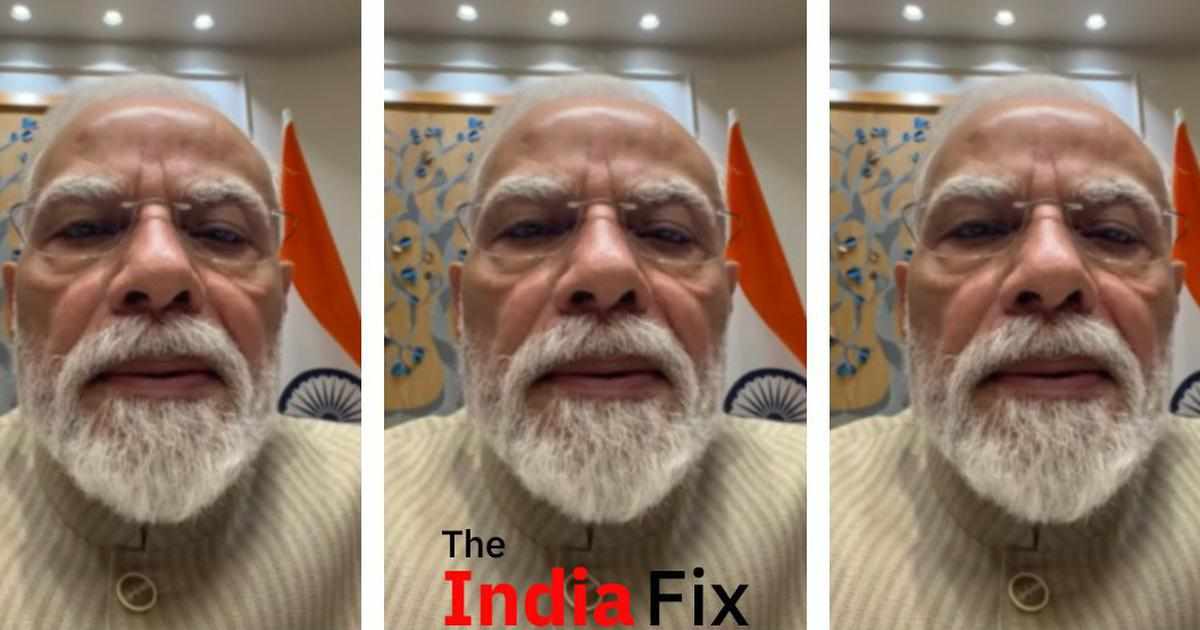
On Sunday, no less than India’s external affairs minister refuted this. Speaking to the Financial Times, S Jaishankar made it clear there is no “blanket arrangement” with Tehran for Indian vessels and the movement of each ship through the strait was being negotiated.
Consequences of ending a friendship
Why did the BJP need to depend on media misinformation to combat LPG shortages due to the Iran war? India has no role in the war at all. The Modi government could, in theory, have said this was a consequence of something that was out of the administration’s control. We have already seen this play out with Covid, where voters did not blame the government for an overtly harsh, unplanned lockdown in 2020 since the pandemic was seen as an act of God.
Part of the answer might lie in the fact that while India has no direct role in the war, the Modi government has identified Indian foreign policy quite closely with the United States-Israel alliance.
For example, Prime Minister Modi was in Israel just before it launched attacks on Iran, killing its head of state, Ali Khamenei. Even after this, India was slow to acknowledge the attack on Iran. It was only on March 5, nearly a week after Khamenei was assassinated, that India expressed commiserations for his death – that too using the unusually low-key method of signing a condolence book at the Iran embassy in Delhi.
India’s stand was not a surprise: under Modi, Delhi has been turning against Tehran for years now. In 2019, the Modi government ceased the purchase of Iranian oil. Earlier in January, the Modi government, under US pressure, ended its involvement in Iran’s Chabahar port. A month later it even seized Iranian tankers (which, Reuters reports, are now being demanded back by Tehran).
These instances now mean that Tehran likely does not view India as neutral when it comes to the current war with the United States and Israel. So while Chinese and even Bangladeshi ships have a blanket exemption from Iran to sail through the Hormuz Strait, India does not. So in effect, India’s confused foreign policy has meant that its government is unable to ensure energy security for its citizens.

Reality of a middle power not a vishwaguru
Realism is the current ruling ideology when it comes to Indian foreign policy. Indeed, realism is an obvious choice given that India, as a middle power, has a tough path to tread. Delhi has few points of leverage with other countries. It is not an export powerhouse, does not control any major value chains and does not produce any vital commodities, such as oil. Its own internal poverty means that threats from Trump around policies such as tariffs are significant risks for India.
Bullies such as Trump understand this well, which explains why a supposed ally like India was hit with one of the world’s highest tariffs or why American ministers can use humiliating language when “allowing” India to buy oil from the Russians.
Of course, if we accept that the realism of a middle power navigating global affairs, it also ends up bringing down the BJP’s so-called vishwaguru, world leader, plank. To its voters, the BJP pitches Modi as a leader that other countries look up to.
For the Iran war, till now, the BJP has used fake news to try and square the circle. But increasingly this strategy might face the law of diminishing returns as Indians see their empty cooking gas cylinders and realise just how vulnerable they are in the face of global crises.
We welcome your comments at letters@scroll.in.




Write a comment ...